

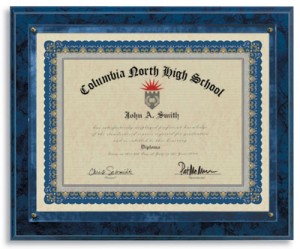
Graduation day is a universal milestone, but the piece of paper handed to students as they cross the stage can vary significantly. While all high school diplomas signify the completion of secondary education, they don’t all represent the same coursework or open the same doors.
It is a common misconception that a high school diploma is a “one-size-fits-all” credential. In reality, diploma requirements vary by state and school district, with state education departments defining the minimum standards. The specific type of diploma a student earns reflects the educational track they completed, and this distinction matters immensely for their future.
Because of this, students shouldn’t choose a diploma track casually. It is a decision that requires input from parents, counselors, and academic advisors. Ideally, these conversations should happen before freshman year begins. While there is often some flexibility to switch tracks after enrollment, doing so later in a high school career is risky. Changing tracks can lead to missing required coursework or discovering credit gaps too late, potentially resulting in summer school or even delayed graduation.
Why High School Diploma Choice Matters
The type of diploma a student earns has a direct ripple effect on their post–high school options. It serves as a signal to colleges, employers, and training programs about the rigor of the student’s academic background.
For example, vocational-focused diplomas are excellent for students aiming to enter the workforce immediately or attend trade schools. However, because the curriculum focuses heavily on technical skills rather than advanced academics, this diploma type may limit access to certain four-year colleges.
Conversely, most universities require a college-prep diploma at a minimum. More selective institutions look even deeper, often requiring an honors-level diploma or an advanced academic program to even consider an application. This makes it crucial for families to review college admission requirements early. Aligning the diploma track with long-term goals ensures that a student doesn’t accidentally close a door they intended to walk through.
Overview of High School Diploma Requirements
Before diving into the specific types of diplomas, it is helpful to understand the baseline. Graduation requirements are not universal; they fluctuate based on state laws and district policies. However, most diplomas share a few commonalities:
- Credit Hours: Students must earn a specific number of credits.
- Core Curriculum: Coursework generally includes math, science, English, and social studies.
- GPA: Students usually need to maintain a minimum Grade Point Average.
Beyond these basics, specific diploma types may add layers of requirements. These can include passing state exit exams, completing capstone projects, or demonstrating career readiness through certifications. This is why school counselors are vital resources—they act as the navigators ensuring students remain on track to meet these varied benchmarks.
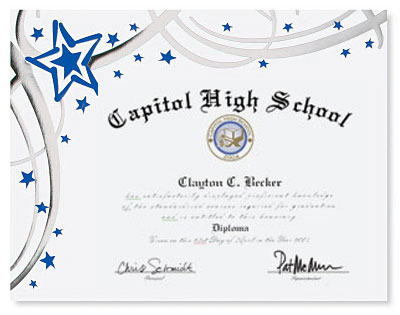
General High School Diploma
The General High School Diploma is the standard baseline. To earn this, a student must simply meet the minimum graduation benchmarks set by their state or district. This involves completing the required number of credits and maintaining a passing GPA.
This track is often designed for students who are looking for a flexible post-graduation path or those who plan to enter the workforce or community college system immediately. While it signifies that a student has successfully completed high school, families should be aware that a General Diploma may not meet the minimum entrance requirements for many four-year universities, which often expect more rigorous coursework in math and foreign languages.
College Prep Diploma
As the name suggests, the College Prep Diploma is designed specifically for students planning to attend a university. This track requires the completion of a state-mandated curriculum that goes beyond basic graduation requirements.
Coursework for this diploma type typically includes:
- Advanced mathematics (often going beyond Algebra II)
- Lab-based sciences (such as Chemistry and Physics)
- Foreign language credits (usually two or more years)
Students on this track must also maintain a specific GPA. Earning this diploma ensures that a student meets the baseline admission requirements for the majority of public and private universities.
Honors College Prep Diploma
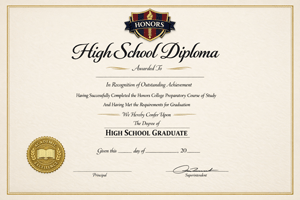
For students eyeing competitive universities, the Honors College Prep Diploma is often the preferred choice. This track builds upon the standard college prep curriculum but ramps up the intensity.
It requires more rigorous coursework, often involving honors-level or accelerated classes. Students are expected to demonstrate strong academic performance and maintain a higher GPA than their peers in the standard college prep track. Admissions officers at selective colleges view this diploma as evidence that a student is willing to challenge themselves academically, which can be a deciding factor in the admissions process.
Technical or Vocational Diploma
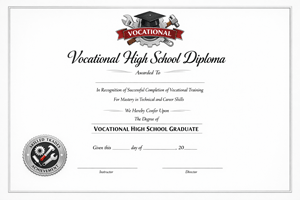
Not every student’s path leads to a traditional university lecture hall. The Technical or Vocational Diploma is designed for students interested in entering skilled trades or technical careers shortly after graduation.
This curriculum is unique because it combines standard academic coursework with career and technical education (CTE) classes. Students often receive hands-on training in fields like automotive technology, cosmetology, healthcare, or information technology. While this offers a head start on a career, students and parents should note that the heavy focus on vocational credits might limit eligibility for traditional four-year colleges, though it is often a perfect bridge to technical institutes.
International Baccalaureate (IB) Diploma
The International Baccalaureate (IB) Diploma is widely considered one of the most rigorous high school credentials available. It is not just a collection of classes but a specific, two-year international curriculum overseen by the International Baccalaureate Organization.
Typically completed during a student’s final two years of high school, the program requires a holistic approach to education, including a lengthy research essay and a theory of knowledge course. Because the standards are so high, students often complete a specialized pre-IB curriculum during their freshman and sophomore years. This diploma is highly recognized by competitive colleges worldwide and often translates into college credit.
Planning Your Diploma Track Early
The most important takeaway regarding diploma types is the necessity of early planning. Waiting until junior year to decide on a specific diploma can lead to insurmountable scheduling conflicts.
Students should take the following steps before high school begins or during their freshman year:
- Review Options: Look at the specific diploma types offered by the high school.
- Consult Experts: Meet with guidance counselors to understand the specific credit requirements for each track.
- Look Ahead: Research the admissions requirements for potential colleges or the certification requirements for desired trades.
Early planning prevents the stress of playing “catch-up.” It ensures that every class taken contributes toward the ultimate goal, whether that is an Ivy League education, a state university, or a skilled trade.

Charting the Path to Graduation
High school diploma choice has long-term consequences that extend far beyond the graduation ceremony. Whether a student aims for a technical career or a doctorate, understanding the different diploma types is the first step toward that future.
By planning early and reviewing state and school requirements carefully, families can prevent scheduling nightmares and graduation delays. Thoughtful decision-making now leads to a smoother high school experience and a more successful transition into adulthood.
Talk to Your Counselor Today
If you are unsure which path is right for you, talk with your school counselor about diploma options as soon as possible. Review your state and school graduation requirements carefully, and plan your high school coursework with your future goals in mind.