

You don’t have to reinvent the wheel when creating a high school graduation program. Most ceremonies follow a familiar structure, and once you know which sections to include, the rest comes together naturally. This guide will walk you through the key components—from the title page to the final recessional—so you can build a program that’s organized, polished, and easy for families to follow.
Even if a small detail is overlooked, a thoughtfully designed and professionally printed program helps elevate the entire event. Let’s make sure yours does just that.

Title Page & Basic Ceremony Details
The title page is your program’s first impression. It sets the tone for the entire event and gives guests the essential information they need before the ceremony even begins. Keep it clean, readable, and unmistakably celebratory.
At a minimum, your title page should include:
- School name: Full and official
- Graduation year: The class of 2025, for example
- Ceremony date and time: Be specific to avoid confusion
- Venue name: Especially helpful if the ceremony is off-campus
- Graduation theme or motto (if applicable): This adds a personal touch
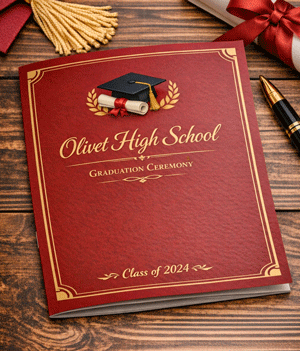
Design-wise, simplicity wins. Use school colors, a bold yet legible font, and minimal graphics. The goal is to communicate clearly, not to overwhelm. Remember, this page will likely be photographed and shared, so make it something your graduates will be proud to display.
Entrance Information & Processional
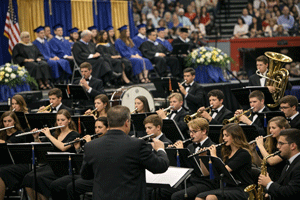
The processional marks the official start of the ceremony, and your program should help guests follow along from the first note. This section clarifies how graduates will enter, what music will accompany them, and who’s responsible for the performance.
Include details such as:
- Song titles: List the specific pieces being played
- Type of music: Instrumental, choir, band, or recorded
- Performer credits: If live music is used, credit the school band, choir, or ensemble—not the original composer
For example, instead of writing “Pomp and Circumstance by Edward Elgar,” write “Pomp and Circumstance, performed by the Lincoln High School Band.” This acknowledges the students and staff who’ve worked hard to make the moment special.
Welcome Message & Opening Remarks
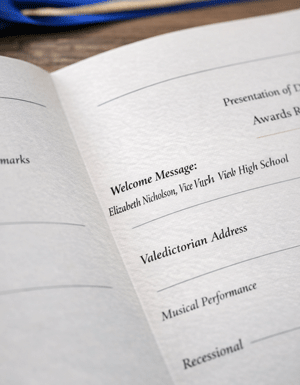
Opening remarks set the tone for the entire high school graduation ceremony. They welcome guests, acknowledge the significance of the day, and prepare everyone for what’s to come. Typically delivered by a school administrator, principal, or salutatorian, this moment bridges the excitement of the processional with the formality of the ceremony itself. Keep this section brief but intentional. Guests should know who to expect without having to flip through pages or guess based on context.
Your program of graduation ceremony should clearly identify:
- Speaker’s full name
- Title or role within the school
- Reason for significance (optional but helpful)
Order of Events
A clear order of events is the backbone of any effective high school graduation program. It helps families anticipate speeches, awards, and the all-important diploma presentations. Without it, guests are left guessing what’s next—and that uncertainty can distract from the ceremony’s emotional impact.
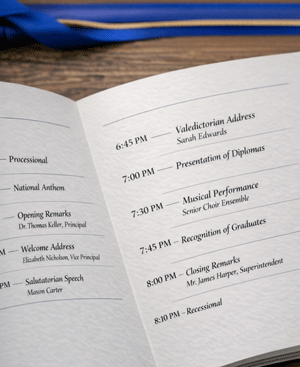
Your high school program should include a straightforward timeline of the ceremony, formatted for easy scanning. Common sections include:
- Processional
- Opening remarks
- Speeches
- Class awards and recognitions
- Presentation of diplomas
- Valedictorian’s speech
- Acknowledgments
- Recessional
Use clear formatting to make this section skimmable. Bullets, spacing, and dividers all improve readability. If your ceremony includes unique elements—like a musical performance or a surprise tribute—note them here so guests know when to pay extra attention.
Class Awards & Special Recognitions
Awards are among the most meaningful moments of any graduation ceremony program. They celebrate students who’ve excelled academically, served their community, or demonstrated leadership throughout their high school years. For families, these moments are just as important as diploma distribution—and your program should reflect that.
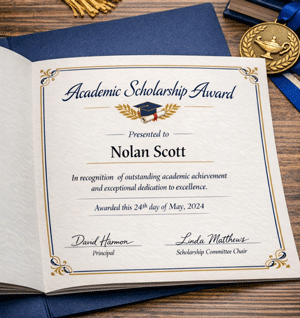
List award recipients clearly and accurately. Common recognitions to include are:
- Cum laude, magna cum laude, summa cum laude
- Subject-specific honors (e.g., Outstanding Math Student)
- Scholarships
- Community service awards
- Special school recognitions
Organize this section alphabetically or by award type, whichever makes the most sense for your ceremony. Double-check every name and spelling. Errors here are especially disappointing for families, and they’re easy to avoid with careful proofreading.
Guest or Visiting Speakers
Not every high school graduation ceremony includes a guest speaker, but when one is present, they deserve a dedicated spot in your high school diploma program. Guest speakers bring outside perspective, share wisdom, or inspire graduates with stories of their own journeys. They’re often community leaders, alumni, or professionals who’ve made an impact in their field.

If your ceremony includes a visiting speaker, your program should list:
- Speaker’s full name
- Professional title or background
- Brief explanation of why they were chosen
If no guest speaker is involved, simply omit this section. There’s no need to include a placeholder or explain the absence—your program should only reflect what’s actually happening during the ceremony.
Presentation of Diplomas & List of Graduates
The presentation of diplomas is the centerpiece of the ceremony, and your high school graduation program should guide guests through it with clarity and care. Begin by listing who will be presenting diplomas—such as the principal, superintendent, or school board members—to ensure proper recognition and help guests follow along.
If you’re including a full list of graduates, accuracy is critical. Alphabetize names, format them cleanly across pages, and triple‑check every spelling. For larger classes, consider multi‑page programs or inserts; high‑quality printing and well‑designed templates can keep the layout polished and easy to read.
Even under tight deadlines, it’s worth taking your time. This section is often the most closely reviewed part of the entire program, and getting it right shows respect for every student and their family.
Valedictorian’s Speech
The valedictorian’s speech typically follows the diploma distribution, offering graduates and their families a moment of reflection and inspiration. It’s a chance for the top-performing student to share their perspective, thank those who’ve supported them, and offer encouragement as the class moves forward. Keep this section simple and respectful. The speech itself will speak volumes—your program just needs to set the stage.
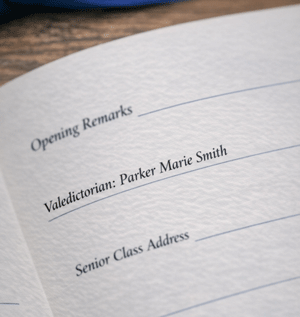
Your graduation ceremony program should clearly identify the valedictorian by including:
- Valedictorian’s full name
- Title: Valedictorian
One important note: Do not include GPA. Academic rankings and grade point averages are personal information, and listing them publicly can be uncomfortable or inappropriate. The title of valedictorian is recognition enough.
Acknowledgments & Thank-Yous
The acknowledgments section is your chance to recognize the people who made graduation possible—teachers, administrators, staff, families, and community partners. Keep it brief and meaningful. For example:
“The Class of [year] extends heartfelt thanks to the faculty and staff of Lincoln High School for their guidance, to our families for their unwavering support, and to our community partners for their generosity.”
You can also note key contributors to the ceremony, such as the graduation committee, volunteers, or sponsors. Aim for sincere gratitude without creating an overly long list.
Ceremony Conclusion & Recessional
Every ceremony needs a clear ending, and the recessional provides that closure. This section outlines how graduates will exit, what music will accompany them, and what guests should expect as the event winds down.
Common details to include:
- Exit music: List the song title and performers (if applicable)
- Recessional format: Will graduates exit in an orderly procession, or will they disperse gradually?
- Post-ceremony instructions (optional): If there’s a reception, photo area, or specific exit route for guests, note it here
Your Program Is a Guide and a Keepsake
A high school graduation program does two things: it guides guests through the ceremony and becomes a keepsake families treasure for years. Getting it right means balancing clarity, detail, and design to create a lasting impression.
A thoughtfully organized, professionally printed program elevates the entire experience for graduates, families, and staff.
Ready to get started? Explore PaperDirect’s graduation program templates, specialty papers, and printing solutions to create a polished, memorable ceremony—whether your event is intimate or large-scale.