
Most classrooms already have a system for recognizing academic achievement. Honor rolls, report card grades, and standardized test scores easily highlight academic success. What schools often lack is a framework for recognizing everything else. We need ways to celebrate the student who lifts up a struggling peer, the kid who tries hardest even when results don’t show it, and the creative thinker who sees the world differently.
Grades recognize outcomes, but awards and recognition for students can honor character, effort, and community. These elements matter just as much to a child’s development. This blog post fills the recognition gap by offering specific, concrete solutions for educators.
You will leave with a full, ready-to-use set of award ideas for students organized by age group, personality type, and contribution. You will also find practical guidance on how to present awards in a way that actually sticks with students.
Why Student Awards Work (and Why Most Schools Underuse Them)
Research consistently links the recognition of effort and character to increased student self-efficacy and classroom engagement. Students who are never formally recognized for non-academic strengths often disengage from school culture entirely, creating an “invisible student” problem.
The most effective school awards for students are specific. Naming the exact behavior being recognized is far more motivating than offering a generic “good job.” Character- and behavior-based awards send a clear signal that the classroom values more than grades, shaping the culture over time. Furthermore, awards do not require a massive ceremony or a large budget. A printed certificate handed out with intention carries real weight.
Some educators worry that awards can feel hollow or resemble participation trophies. The antidote to this concern is specificity and selectivity. By choosing targeted student awards ideas, you can ensure recognition remains meaningful. Need a simple way to start? Browse printable student certificates to begin your recognition program.
Award Ideas for Elementary Students (K–5)
Elementary awards should feel celebratory and accessible. Each award must go beyond a simple name and describe the exact behavior or trait that qualifies a student. Stock up on elementary student award certificates to make these moments special.
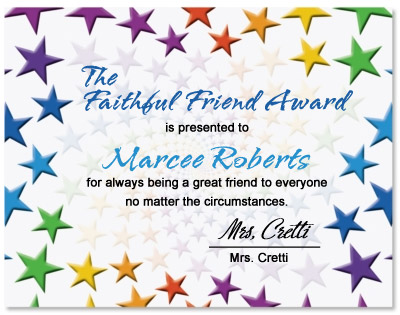
- The “Faithful Friend” Award: This recognizes students who consistently go out of their way for peers. They might share materials without being asked, include classmates who are left out, or check on someone having a hard day. Keep a small supply of these on hand for spontaneous recognition.
- The “Happy Helper” Award: Give this to the student who volunteers first, cleans up without being asked, and assists a struggling classmate. Publicly recognizing helping behavior creates a classroom culture where more students choose to help.
- The “Excellent Effort” Award: This is highly important pedagogically, especially as one of the best awards for students who struggle. It explicitly distinguishes effort from outcome. It goes to the student who worked hardest, not the one who scored highest, leveling the recognition field.
- The “Creative Thinker” Award: This honors students who bring something original to their work, like a surprising story or a unique math solution. It actively counters the pressure to only produce “correct” work.
- The “Super Reader” Award” This recognizes reading enthusiasm, growth, or consistency. It honors the student who has grown the most or reads the widest variety of books.
- The “Kindness Champion” Award: This recognizes students who model kindness as a habit toward classmates and staff. It works especially well when the recipient is nominated by peers.
Award Ideas for Middle School Students (Grades 6–8)
Middle school students navigate complex social dynamics and increasing academic pressure. Student award ideas at this age must acknowledge this complexity and invite peer participation.
- The “Most Improved” Award: This celebrates measurable growth relative to a student’s own baseline. Whether it highlights a grade trajectory, participation, or behavior, it shows the school is paying attention to their progress.
- The “Team Player” Award: This recognizes students who elevate group work by listening, distributing labor fairly, and encouraging quieter members.
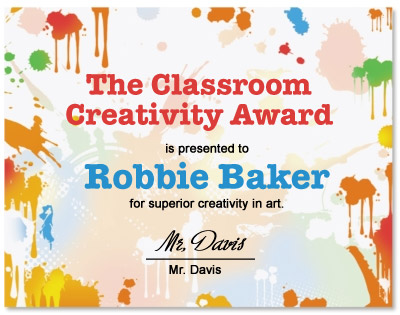
- The “Classroom Creativity” Award: Middle school creativity often gets suppressed by test prep. This award pushes back, honoring the student who approaches problems unconventionally in project design or science experiments.
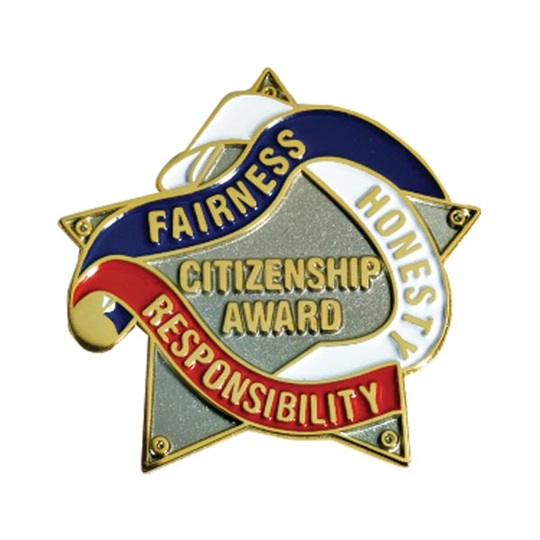
- The “Class Citizen” Award: Following rules can invite peer criticism at this age. This award recognizes students who do the right thing regardless of social pressure.
- The “Leadership in the Making” Award: This is for students demonstrating emerging leadership, such as initiating positive action or advocating for peers.
Peer Nomination Note: Allow students to nominate peers using a simple two-question form. It produces highly specific and emotionally resonant award language. Choose middle school student award certificates to give these awards a professional touch.
Award Ideas for High School Students (Grades 9–12)
High school recognition carries weight for college applications and emerging adult identities. Awards here must feel earned and mature.
- The “Leadership Award”: This honors the student who leads through action, organizing and stepping up when nobody else does, rather than simply holding a formal title.
- The “Community Service Award”: Honor sustained commitment to service, such as tutoring peers or organizing community drives. This carries excellent resume weight.
- The “Best Project” or “Academic Excellence” Award: Academic achievement absolutely deserves formal recognition. This award should highlight demonstrated excellence in a specific discipline, not just the highest overall GPA.
- The “Most Resilient” Award: This powerful award recognizes a student who has navigated academic or personal difficulty and kept going. Select and present this carefully to honor strength without exposing hardship.
- The “Unsung Hero” Award: Honor the student who contributes consistently and quietly, mentoring younger peers or making clubs function without seeking credit.
The “Diverse Talents” Note: High school programs are most effective when covering multiple domains, ensuring students with non-traditional strengths have an equal shot at recognition. Print these on quality [high school award certificates] for maximum impact.
Seasonal and Themed Awards to Keep Recognition Fresh All Year
Recognition programs lose impact when they become predictable. Rotating award themes throughout the school year keeps things fresh and relevant.
Fresh Start Award (Back-to-School)
For the student who walked into a new year with visible courage or a noticeably improved attitude.
Most Creative Thinker (Fall/Halloween)
Tie this to a thematic project or costume design to keep the award fun and age-appropriate.
Warm Heart Award (Winter/Holiday)
This recognizes acts of kindness or generosity during a time of year when giving is already a cultural focus.
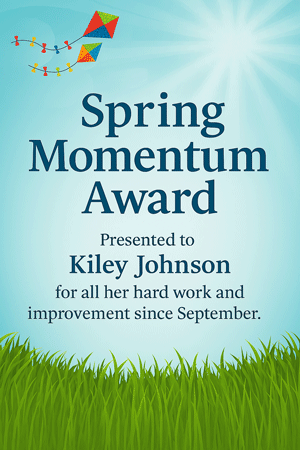
Spring Momentum Award (Spring)
A mid-to-late-year recognition for students who have visibly improved since September.
End of Year Awards
Reserve the most significant honors, like the Most Resilient or Unsung Hero, for the end of the year when they carry maximum emotional weight.
Ongoing Awards: Spontaneous awards distributed frequently work best for daily character traits. Date-stamped [seasonal award certificates] signal that a teacher was paying attention at a very specific moment.
How to Present Student Awards So They Actually Land
An award is only as good as its presentation. The most important principle is to name the specific behavior, not just the award title. Saying “This award goes to Maya because she noticed a new student eating alone and sat with them” lands perfectly.
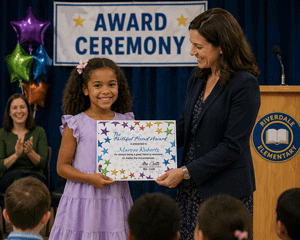
Classroom presentations: Keep them brief and warm. A 60-second acknowledgment with eye contact is highly meaningful.
School-wide ceremonies: Let students emcee the event. Student voices presenting peer awards dramatically increase emotional engagement.
Virtual award ceremonies: A pre-recorded video message with a digital certificate is a fully viable option.
Physical certificate quality matters: Thin copy paper communicates an afterthought. Specialty paper signals deliberate recognition.
Frame or folder presentation: A certificate presented in a simple folder is much more likely to be kept for years.
Timing: Mid-week presentations keep the energy up, whereas Friday afternoon awards often get lost in the weekend transition. Present them perfectly with award paper designed for special occasions.
The Lasting Impact of Meaningful Recognition
Grades are just one measure of a student. A classroom that recognizes effort, character, creativity, and community contribution produces students who feel genuinely seen. That feeling has long-term consequences for how they engage with school and with each other. None of this requires a big budget or a formal administrative program. It simply requires intention and the right tools.
Every student on this list deserves a certificate that looks as intentional as the recognition behind it. Paper Direct’s award and certificate paper makes it easy to print professional, personalized awards right from your own classroom. There is no vendor, no minimum order, and no waiting. Browse the student award certificates collection and have recognition-ready certificates on hand before your next opportunity to use one.