
Addressing wedding invitations to military officers takes more than swapping in a rank—it means following long-standing etiquette that honors the service member’s career. Whether you’re the bride, the groom, or a family member helping word the invitations correctly, this guide walks you through when to include military titles, how to address the envelopes, and exactly what to write.
You’ll find real wording examples for the Navy, Army, Air Force, and Marine Corps, plus guidance for military couples and dual-service families. By the end, you’ll know how to address military wedding invitations with confidence—and where to find stationery that matches the occasion.
Understanding Military Titles in Wedding Invitations
Military titles on a wedding invitation identify the rank and branch of the bride, groom, or their parents. Getting these details right is a matter of respect as much as etiquette.
Ranks generally fall into two categories:
- Commissioned officers: Ensign through Admiral in the Navy; Second Lieutenant through General in the Army, Air Force, and Marines.
- Enlisted personnel: Seamen, Privates, Petty Officers, and Noncoms.
The wording rules differ for each group. A few key points to remember:
Include parents’ titles too. If a parent of the bride or groom holds military rank, list their title and branch the same way.
Always spell titles out in full. Write “Lieutenant,” not “Lt.,” and “Captain,” not “Capt.” Abbreviations read as informal and are considered incorrect on formal invitations.
When to Include Military Titles on Your Invitation
Including a military title is a personal choice, not a requirement. Many active-duty officers add their rank because it reflects a career milestone. Others prefer a more traditional, civilian-style invitation.
Here’s how to decide:
- Enlisted service members: Etiquette calls for omitting rank altogether. The invitation lists only the branch of service—for example, “United States Marines”—rather than an enlisted title.
- One partner serves, the other doesn’t: Include only the military member’s title. The civilian partner’s name appears without any rank.
- Parents who serve or served: When parents of the couple are service members or veterans, their titles are typically included in the invitation’s opening line.
Formal vs. Informal Wording for Military Weddings
Formal invitations follow traditional etiquette: full names, full titles, no abbreviations, and third-person phrasing like “request the honor of your presence.” Browse PaperDirect’s wedding invitations for styles that suit this classic tone.
Informal or casual invitations can soften the language while still crediting rank and branch. This works well for smaller weddings, elopements, or destination ceremonies.
- Classic engraved or LetterTop™ styles call for formal wording.
- Casual fold-up or seal-and-send designs can carry a more relaxed tone.
Whichever tone you choose, keep military titles consistent across the whole suite—invitation, response card, and wedding programs should all use the same wording.
Wedding Invitation Wording Examples by Branch and Rank
The exact format depends on branch of service and rank. Use these examples as your reference—and remember, military titles should never be abbreviated.
Navy
Commander and Higher
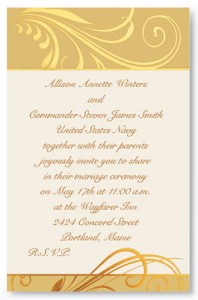
Commander Steven James Smith
United States Navy
Lieutenant Commander and Below
Steven James Smith
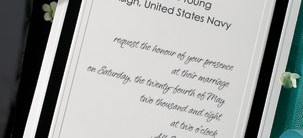
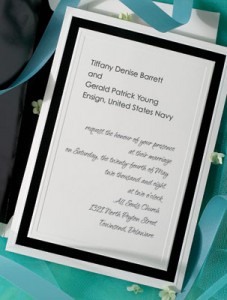
Ensign, United States Navy
Petty Officers and Seamen
Steven James Smith
United States Navy
Army, Air Force, and Marines
Captain and Higher
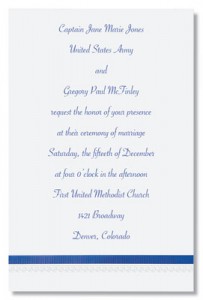
Captain Jane Marie Jones
United States Army
Lieutenant
Jane Marie Jones
Lieutenant, United States Air Force
Noncoms and Privates
Jane Marie Jones
United States Marines
How to Address the Envelopes
If you’re wondering how to address wedding invitations to military personnel on the envelope, the rules match the invitation itself: spell out full ranks, never abbreviate, and include the complete branch of service.
Keep these guidelines in mind:
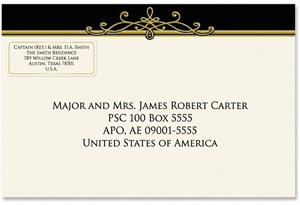
- Outer envelope: List the guest’s complete name and rank exactly as it would appear on military correspondence—for example, “Major and Mrs. James Robert Carter” rather than “Maj. and Mrs. Carter.”
- Inner envelope: If your suite includes one, use a slightly less formal version of the name, following the same etiquette as a civilian wedding.
- Return address: List the sender’s title too, if they hold military rank, so the formality stays consistent front and back.
Wording for Invitations When Both Partners Are Military
When both the bride and groom serve, each partner’s title and branch are listed separately. For example:
“Captain Jane Marie Jones, United States Army, and Lieutenant Steven James Smith, United States Air Force, request the honor of your presence…”
A few things to note:
- List the ranks in the order that reads most naturally. There’s no single required precedence for modern dual-military couples.
- If both partners are enlisted, omit ranks for both and list branches only.
- Dual-military invitations are a great chance to include both branches’ colors or a shared monogram for a personalized touch.
Incorporating Military Symbols and Themes
Many military couples add subtle nods to their service through design—a branch seal, service colors, or a monogram that includes rank—without cluttering the formal wording.
Ways to weave in the theme tastefully:
- Envelope seals or thank-you cards in branch colors (Navy blue and gold, Army green, Air Force blue, Marine Corps scarlet and gold) echo the theme without overpowering it.
- Keep design elements secondary to the wedding’s overall color palette and formality. The goal is to honor service, not turn the stationery into a uniform.
- Ask your stationer about custom LetterTop™ or fold-up styles that can accommodate branch emblems cleanly.
Common Mistakes to Avoid
Even careful couples slip up on these details. Watch out for:
- Abbreviating rank. Writing “Lt.” instead of “Lieutenant” is the most common wording mistake—always spell titles out in full.
- Adding a rank title for enlisted personnel. Etiquette calls for branch only, with no title, for noncommissioned and enlisted service members.
- Forgetting a parent’s or host’s title. If they’re a veteran or reservist whose rank should still be recognized, include it.
- Inconsistent envelope wording. Matching formality throughout the suite avoids an awkward mismatch.
- Guessing on rank or branch protocol. When in doubt, check a current etiquette resource or ask the service member directly, since conventions can vary slightly by branch and era.
Frequently Asked Questions
How do I address a wedding invitation to a military officer?
Spell out the officer’s full rank and branch of service, and never abbreviate. For example, “Captain Jane Marie Jones, United States Army.” Officers typically include their title on formal invitations, since it reflects their rank and years of service, while enlisted personnel traditionally list only their branch, without a rank title.
Should enlisted military personnel include their rank on wedding invitations?
No. Traditional etiquette omits rank for enlisted service members and lists only their branch of service, such as “United States Marines.” This applies to Petty Officers, Seamen, Noncoms, and Privates. Including a title for enlisted personnel is a common wording mistake, so when in doubt, leave the rank off and list the branch alone.
How do you address wedding invitation envelopes for military weddings?
Follow the same rules used inside the invitation: spell out full titles and branches, and never abbreviate rank on the outer or inner envelope. For example, write “Major and Mrs. James Robert Carter” rather than “Maj. and Mrs. Carter.” Keep return address titles consistent if the sender also holds military rank.
Get the Wording Right, Every Time
Addressing wedding invitations to military officers and personnel comes down to two things: spelling out titles in full, and matching the format to the correct branch and rank. Whether you’re following Navy officer conventions, honoring an enlisted service member’s branch, or wording an invitation for two military partners, the formats above will help you get it exactly right. Regardless of rank, military weddings deserve wording that reflects the respect and pride behind that service.
Ready to bring your invitation to life? Browse PaperDirect’s wedding invitations to find a formal or casual style that fits your military wedding, then use the wording examples above to make sure every title is worded perfectly.
Comments are closed.