

Writing wedding thank you cards is one of the last jobs on the to-do list, and it is the one many couples put off. Good wedding thank you card wording does not have to be long or fancy. A few warm, specific sentences show your guests you noticed their generosity and are glad they were part of your day. A handwritten note also adds a personal touch that a text or email cannot match.
This guide gives you a simple formula, sample wording for family, friends, colleagues, and group gifts, and tips for money gifts and tricky situations. When you are ready to write, browse PaperDirect’s thank you note cards and wedding note cards.
Wedding Thank You Card Wording Basics: What to Include
A wedding thank you card needs five things: a greeting, thanks for the specific gift, how you plan to use it, a personal line about the person or the day, and a warm closing. Three to five sentences is plenty.
- Greeting. Address the guest by the name you normally use, such as “Dear Grandma and Grandpa” or “Dear Aunt Pat and Uncle Tom.”
- Thanks for the specific gift. Name the gift (“the beautiful china tea set”) rather than saying “your gift.” If it was money, thank them for their generosity instead of naming the amount.
- How you will use it. Tell them what you plan to do with it. This is what makes a note feel personal.
- A personal line. Mention that you were glad they were there, or that you wish they could have been, and add a memory if you have one.
- A warm closing. “With love,” “Fondly,” or “Sincerely,” followed by both of your names.
Being specific matters. If a note is vague, the gift giver may feel you are writing hundreds of generic thank you notes and do not remember their gift. One concrete detail turns a form letter into a real thank you.
Formal and informal wedding thank you note wording differ mostly in tone, not in these five parts. Formal notes use titles and fuller sentences, while casual notes sound like you talk. Both are covered below in Formal vs. Casual Wording.
Thank You Card Etiquette: Timing and Addressing
Traditional etiquette favors a handwritten card for wedding gifts. A text or email is fine as a quick “it arrived, thank you!” but most etiquette guides still expect a handwritten note to follow. For general rules that apply to every occasion, see Thank You Note Etiquette: Do You Know What’s Acceptable?
When to send. Send each card as soon as you can. A commonly cited guideline is within two to three months of the wedding, and within a couple of weeks for gifts that arrive before the big day. Writing a few each day keeps the stack from piling up.
Who to thank. Thank everyone who gave a gift, whether or not they attended. Many couples also thank people who helped with the wedding, such as hosts of showers or parties, even if no gift came with it.
How to address the card. Address it to everyone who gave the gift. If the gift is from your aunt and her boyfriend, address the card to acknowledge both of them. If you are not sure how someone spells their name or prefers to be addressed, check before you write.
Who signs. Sign with both of your names, even if only one of you wrote the note. Many couples split the stack and take turns writing.
Envelopes. Check names and addresses against your guest list before you write. Wedding address labels can keep addressing neat if you have a long list.
Wedding Thank You Note Wording Examples for Different Scenarios
Use these samples as a starting point and change the details so each note sounds like you. Every sample keeps the same formula: specific gift, how you will use it, and a personal line.
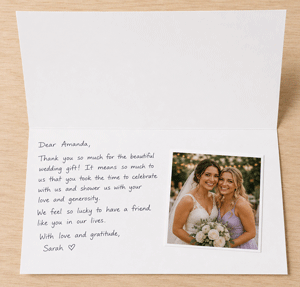
Image note: Insert photo of a handwritten thank you card with a sample message visible.
Gifts from Family Members
Wedding thank you card wording for relatives can be warm and a little more personal. This example shows how to be specific:
Dear Grandma and Grandpa, Thank you so much for the beautiful China tea set you gave us on our special day. We are planning a get-together for Mom, Dad and you both in November, and this will be the perfect addition to our afternoon of great food and delicious tea. Your thoughtfulness and generosity are greatly appreciated. Sincerely, Jenny and Jack
Gifts from Friends
Friends get a lighter, chattier tone:
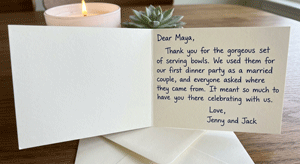
Dear Maya, Thank you for the gorgeous set of serving bowls. We used them for our first dinner party as a married couple, and everyone asked where they came from. It meant so much to have you there celebrating with us. Love, Jenny and Jack
Gifts from Colleagues
Keep it warm but a little more reserved, and mention the workplace connection:
Dear Mr. Alvarez, Thank you for the lovely picture frame. We have already put our favorite wedding photo in it and it looks wonderful on the mantel. Thank you also for your kind wishes, and for making our work friendship such a good one. With appreciation, Jenny and Jack
Bonus: Wording for Money, Gift Cards, and Other Special Situations
Money is the gift couples most often struggle to word. When the gift is money, avoid saying “thank you for the cash” or “thank you for the money.” Instead, thank them for their generosity and say what you plan to do with it:
Dear Aunt Pat and Uncle Tom, Thank you very much for your generous wedding gift. That will go straight toward the den remodel we have been planning, and we will think of you every time we use the room. As always, you were much too generous, but we appreciate your thoughtfulness very much. Can’t wait to see you again, Jenny and Jack
Do not mention the amount, even to say it was generous. For a gift card, name the store and what you plan to buy: “We are putting your gift card toward a new set of bakeware, and we cannot wait to use it.”
Other situations come up often:
- Guest could not attend but sent a gift: “We missed you at the wedding, but your gift made us feel your love from afar. Thank you for the beautiful serving tray.”
- Guest attended but did not give a gift: Thank them for being there. “Thank you for celebrating with us. Having you at our wedding meant the world.”
- A gift you will not keep: Thank them for the thought and for the gift, and do not mention returns or exchanges.
- Wedding party, parents, and helpers: Thank them for what they did, such as their time, their support, or a toast, in addition to any gift.
Personalizing Your Message
Two small touches do most of the work: mention the gift and share a moment from the wedding.
- Mention the gift. Name it and describe how you will use it or where it will live in your home. “The cutting board is already in daily use” feels more genuine than “thanks for the gift.”
- Share a memory. Recall a moment from the day involving that guest: a dance, a toast, a long drive to get there. “We loved seeing you on the dance floor” takes one sentence.
- Mention the relationship. A line about your history together (“you have been in our corner since college”) is easy to add and often the part people save.
- Keep it to a few sentences. A short note with one real detail is better than a long one that could have gone to anyone.
Formal vs. Casual Wording
Match your tone to the relationship and the style of your wedding. Neither is wrong, but a note to a great-aunt reads differently than a note to a college roommate.
Formal example. Use titles, complete sentences, and a traditional closing:
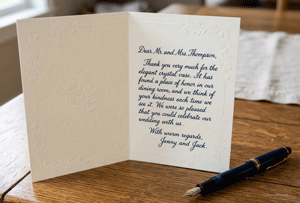
Dear Mr. and Mrs. Thompson, Thank you very much for the elegant crystal vase. It has found a place of honor in our dining room, and we think of your kindness each time we see it. We were so pleased that you could celebrate our wedding with us. With warm regards, Jenny and Jack
Casual example. Use first names and everyday language:
Dear Sam and Jordan, Thank you so much for the cooking class voucher! We have already booked a night in the fall, and we can’t wait to put it to good use. Thank you for being there with us. It made the day. Love, Jenny and Jack
Handling Group Gifts
When several people chipped in on one gift, thank each person where you can. If you do not know every contributor, write to the person who organized it.
- If you know each giver: Write each person an individual note, even if the wording is similar. Add a line that is specific to each one.
- If it came from a group such as a team or office: Send one note to the organizer and ask them to share it, or address one card to the whole group (“Dear Marketing Team”).
- Name the gift and the group. Say what you received and who it was from, so every contributor feels included.
Sample wording for a group gift:
Dear Marketing Team, Thank you so much for the beautiful serving platter and for the kind card everyone signed. We love it, and it will be the centerpiece of our table at holiday dinners. Having so many of you celebrate with us made our day even better. With appreciation, Jenny and Jack
Tips for Writing Your Cards
Keep it sincere and avoid these common pitfalls.
- Be sincere. Write the way you would talk to the person. A heartfelt sentence beats a perfect paragraph.
- Do not write a form letter. Change at least one detail for every card.
- Skip the apology for being late. Just send it. A brief “thank you for your patience” is enough if it has been a while.
- Do not mention the amount of a money gift, or compare gifts.
- Do not skip the personal line, even when you have 100+ cards to write.
- Proofread names and spelling. Double-check before you seal the envelope.
- Write in batches. A few cards a day is easier than a weekend marathon, and your handwriting will stay neat.
Creative Ideas for Thank You Cards
Once the wording is right, small creative touches can make the card feel like part of your wedding.
- Unique wording ideas. Open with a line from your vows, a favorite song lyric, or an inside joke the guest will recognize. Close with something warmer than “Sincerely,” such as “With all our thanks” or “We love you.”
- Wedding themes. Choose a note card in your wedding colors or style so the thank you feels like a continuation of the day. PaperDirect’s wedding note cards are a good place to start.
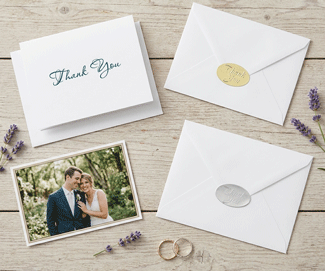
- Photos. Slip in a favorite photo from the wedding, ideally one that includes the guest.
- Finishing touches. Seal the envelope with a coordinating seal. Wedding Envelope Seals For The Best Invitation Presentation has ideas.
FAQ
What do you write in a wedding thank you card?
Start with a greeting, thank the guest for the specific gift, say how you plan to use it, add a personal line about them or the day, and close warmly. Three to five sentences is enough. For example: “Thank you for the beautiful tea set. We will use it at our first family gathering.”
How do you word a wedding thank you note for money?
Avoid saying “thank you for the cash” or naming the amount. Thank the guest for their generosity and say what you plan to do with it, such as “Thank you for your generous gift. It will go toward our new kitchen, and we will think of you every time we use it.”
How long do you have to send wedding thank you cards?
A commonly cited guideline is to send them within two to three months of the wedding, and within a couple of weeks for gifts that arrive before the wedding. Sooner is always better. If you are running late, send the cards anyway with a warm thank you. A late card is better than none.
Should wedding thank you notes be handwritten?
Traditional etiquette favors handwritten notes for wedding gifts because they show effort and personal care. A text or email is fine as a quick “it arrived” message, but a handwritten card should still follow. If your handwriting is hard to read, write slowly and keep the note short.
Conclusion. Wedding thank you cards are a small effort that makes a lasting impression. Be specific about the gift, say how you will use it, add one personal line, and sign it from both of you. Do that for every guest and you will have thanked them properly, whether the wording is formal or casual.
Ready to start writing? Browse PaperDirect’s thank you note cards or choose a coordinating style from PaperDirect’s wedding note cards and get your thank yous in the mail.