
Graduation is a once-in-a-lifetime milestone, and sharing the news with family and friends makes it even more meaningful. But once you sit down to write, it’s easy to feel stuck. What goes on the card? How formal should the graduation announcement wording be? Can you add a personal touch without going overboard?
This guide covers the essentials, sample wording for formal and casual announcements, and how to address, assemble, and send them. When you’re ready to print, PaperDirect’s graduation invitations and announcements collection has everything you need to bring your wording to life.
What’s the Difference Between a Graduation Announcement and an Invitation?
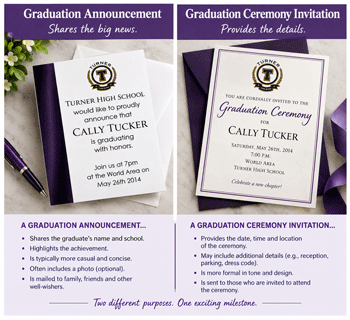
A graduation announcement is a card or note that tells people a student has graduated. It shares the news and celebrates the achievement — it does not ask anyone to attend.
That’s the key difference from an invitation. An invitation asks guests to the ceremony or a party, so it needs a time, a place, and often an RSVP. An announcement simply shares the news, and it’s a good fit for people who live far away or who can’t be at the ceremony. Receiving an announcement doesn’t obligate anyone to send a gift, though a card or note of congratulations is always welcome.
If you also want to invite people to a party, see our guide to graduation invitation wording.
Key Information to Include in Graduation Announcement Wording
Start with the basics. Every announcement should clearly communicate the who, what, when, and where. Here’s what to include:
- Graduate’s full name. Use the name as it appears on school records.
- School name and location.
- Degree, diploma, or grade level. For example, high school diploma, Bachelor of Arts, or kindergarten.
- Date of graduation. Add the time and venue only if guests are invited to attend.
- Who is announcing. Parents, a family, or the graduate themselves.
Sample graduation announcement wording:
The [Last Name] Family proudly announces the graduation of [Graduate’s Full Name] from [School Name] on [Day], [Month] [Date], [Year]. [Ceremony location, City, State].
Pro Tip: Always double-check spelling, dates, and titles before sending to print. A small typo on a keepsake announcement is hard to overlook.

How Do You Add a Personal Touch to a Graduation Announcement?
The essentials get the information across, but personalization is what makes an announcement worth keeping. A few ways to make yours stand out:
- Include a favorite quote or a meaningful verse or line.
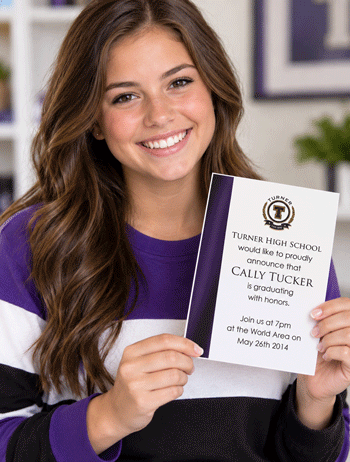
- Add a senior portrait or photo collage.
- Mention future plans, such as college, trade school, military service, or a career.
- Write a short thank-you message or personal reflection.
Example:
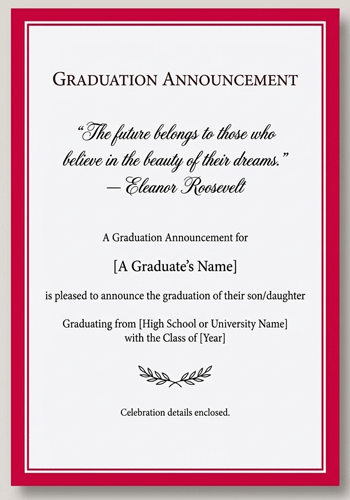
“The future belongs to those who believe in the beauty of their dreams.” – often attributed to Eleanor Roosevelt.
[Graduate’s first name] will attend [College or Program] this fall to study [Field].
If you’re adding a photo, choose one that’s sharp and well lit, and keep the text short enough that it doesn’t compete with the picture.
Formal and Casual Graduation Announcement Wording Examples
The wording sets the tone for the whole announcement. Depending on the graduate’s personality and the occasion, you might lean formal, casual, or somewhere in between. Keep the copy short and genuine — around four to six lines is ideal for a clean, readable design.
Formal wording example (commencement announcements):
Mr. and Mrs. [First and Last Name] proudly announce the graduation of their [son/daughter/child] [Graduate’s Full Name] from [School Name]. Commencement Ceremony: [Month] [Date], [Year], [Time]. [Venue].
Casual wording example:
We’re thrilled to share the news! [Graduate’s Name] is graduating from [School Name]. Join us as we celebrate on [Month] [Date].
Other sample phrases to consider: “Hats off to the graduate,” “The tassel was worth the hassle,” “On to the next adventure,” or “We did it!” To keep it sounding authentic, read the wording aloud and ask whether it sounds like the graduate. If it doesn’t, simplify it.
Design and Layout Considerations for Graduation Announcements
Good design makes the wording easier to read and the keepsake more memorable:
- Colors and themes. Pick colors that reflect the graduate’s personality, or use school colors for a classic look.
- Readability. Choose a clear font, keep the name as the largest element, and leave white space around the text.
- Format. Printed announcements make perfect keepsakes for scrapbooks and memory boxes, which a digital file can’t replicate. Digital announcements are quick and free to send. Many families do both, sending a printed card to relatives and a digital version by email or text.
- Layout options. A flat card or a postcard-style announcement is easy to mail. You can also coordinate your announcements with graduation invitations for a matching set.
- Design tools. Many online design tools let you drop in your wording and photo. Always view a proof before you print.
How Do You Assemble and Address Graduation Announcements?
Assembling announcements is simple when you work in steps:
- Proofread. Before sealing a single envelope, check that all names are spelled correctly, the date is accurate, and photos print clearly at the chosen size.
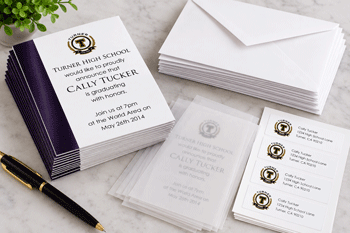
- Gather the pieces. The announcement, any inserts (a party invitation, photo card, or reception card), and an envelope for each.
- Stack in order. Many people place the announcement on top of any inserts, so it’s the first thing the recipient sees when they open the envelope. Insert the stack with the printed side facing the flap.
- Seal and stamp. Add a return address label and enough postage. Square or thicker cards may cost more to mail, so check at the post office.
How to address graduation announcements: For a formal look, handwrite the envelope with the recipient’s full names (for example, “Mr. and Mrs. [First and Last Name]”). For casual announcements, a first-name address or a neatly printed label is fine. Check the spelling of every name and confirm addresses before you print.
Pro Tip: Order 10–15 extra announcements. Last-minute additions to the guest list happen, and family members often appreciate a keepsake copy of their own.
When Should You Send Graduation Announcements?
Timing and delivery matter, so plan ahead:
- When to send. Many guides suggest mailing at least two weeks before the ceremony. If you aren’t including a party invitation, you can send announcements for up to a few weeks after graduation. Allow extra mailing time for recipients who live far away.
- Who to send to. Close family and friends first, then extended family, teachers, mentors, and others who supported the graduate. Ask the graduate who they’d like included.
- Digital vs. physical. Use printed announcements for people who will keep them. Use digital announcements for a quick, last-minute share or for a wider audience.
- Pair with a party invitation. If you’re hosting a party, send the party invitation and announcement together. It saves postage and keeps everything in one tidy package.
Once the cards go out and gifts or notes of congratulations come in, send thank-you notes promptly. Within about two weeks of receiving a gift is a good rule to follow.

Creative Alternatives to a Traditional Graduation Announcement
A traditional card is not the only way to announce a graduation. A few unique ideas:
- Share a short video message or a photo slideshow on social media.
- Add a QR code to the printed card that links to a senior video or digital photo album.
- Combine the announcement with a party invitation, so one mailing does both jobs.
- Make a photo-collage announcement that doubles as a keepsake.
For party inspiration, see Let the Graduation Party Commence – Creative Party Ideas.
Common Mistakes to Avoid When Writing Graduation Announcements
Waiting too long. Build your mailing list early so you aren’t addressing envelopes the night before.
Overloading with information. Honors are fine to mention, such as valedictorian, salutatorian, or graduating with honors, but skip the full resume. The announcement should feel proud, not promotional.
Leaving out essential details. Check the name, school, degree or grade, and date.
Skipping the proofread. Have a second person look for typos before printing.
Confusing an announcement with an invitation. If you want guests to attend, include the time, place, and RSVP details.
Send a Graduation Announcement That Becomes a Keepsake
Graduation announcements are a chance to share a proud moment in your own words. Include the essentials, add a personal touch, proofread carefully, and send them with plenty of time to spare. The result is a keepsake that friends and family will hold on to long after the ceremony is over.
Ready to put it all together? Browse PaperDirect’s graduation invitations and graduation postcards to create announcements that celebrate your graduate in style.
FAQ
What should graduation announcement wording say?
Good graduation announcement wording names the graduate, the school, the degree or grade level, and the graduation date. Add who is announcing, such as parents or the graduate. Keep it to four to six lines. A short quote or future plans, such as the college they will attend, can add a personal touch.
What is the difference between a graduation announcement and an invitation?
An announcement shares the news that someone has graduated and doesn’t ask anyone to attend. An invitation asks guests to the ceremony or a party and includes the time, place, and RSVP details. Receiving an announcement doesn’t mean you must give a gift, though a note of congratulations is always welcome.
When should you send graduation announcements?
Many guides suggest mailing graduation announcements at least two weeks before the ceremony. If you aren’t sending a party invitation with them, you can mail them up to a few weeks after graduation. Allow extra time for relatives who live far away, and build your address list early so nobody is missed.
How do you address graduation announcements?
For a formal look, handwrite the envelope with the recipient’s full names, such as “Mr. and Mrs. [First and Last Name].” For casual announcements, a first-name address or a neatly printed label works well. Always confirm spelling and addresses before printing.
What’s the biggest mistake to avoid with graduation announcements?
The most common mistake is confusing an announcement with an invitation. If guests are expected to attend an event, the card needs the time, place, and RSVP details — details a true announcement leaves out.