
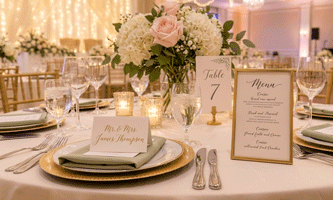
A great reception comes down to planning: enough seating, enough food, and small details that tell your guests where to go and what to expect. That includes your wedding reception stationery, such as reception cards, place cards, and menu cards, as well as the practical supplies working behind the scenes. Doing much of it yourself, with friends and family pitching in, can help keep costs down and make the day feel personal.
This guide walks through a wedding reception supplies checklist from budget to final touches, and shows exactly where PaperDirect’s wedding reception cards and other printable stationery fit into the plan.
Setting a Budget for Reception Supplies
Start with a number, then work backward. A clear budget keeps a wedding reception supply list from growing one “just in case” purchase at a time.
- List every category first. Categories include eeating and tables, linens and tableware, food and drink, decor, entertainment, photography, and stationery.
- Price the big items first. Venue, food, and any rentals will shape what is left for everything else.
- Add a cushion. Set aside a small buffer for extras you did not plan for, such as more napkins, more ice, or a last-minute guest.
- Sort every item into two columns. “Must-have” items are the things the reception cannot run without; “nice-to-have” items are the extras you add if the budget allows.
Must-haves usually include seating, plates and utensils, serving supplies, and a way for guests to find their seats. Nice-to-haves tend to be things like confetti, extra decor, and favors. Stationery is an easy place to add polish without a big spend, especially when you print it yourself on paper made for the job.
Creating a Guest List
Your guest count drives almost every other decision, so settle it as early as you can. The number of guests decides how many tables and chairs you need, how many place settings to buy or rent, how much food to prepare, and how many printed pieces to order.
Once RSVPs come in, use the final count to finalize each supply category:
- Seating: Total guests divided by the seats per table gives you a table count. Check the seats-per-table figure with your venue or rental company rather than guessing.
- Tableware and linens: Plan one full place setting per guest, plus a few spares for spills and breakage.
- Food and drink: Share the final count with whoever is cooking or catering.
- Stationery: Count place cards, menu cards, and reception cards against your final list. Many card packs come in set quantities (for example, 28 per pack), so check the pack size before you order.
If you will assign seats, it helps to decide the approach before you print anything. See What are the “Rules” for Wedding Reception Seating? for guidance on arranging tables.
Venue Considerations
The venue decides what you have to bring. A hall with only a kitchen and a room of tables needs very different supplies than a full-service venue that provides everything. Before you commit, ask:
- What is included? Tables, chairs, linens, plates, glasses, and utensils may or may not be provided.
- What is the capacity? Make sure the room comfortably fits your guest count, a dance floor, and a buffet or serving area.
- What can you use in the kitchen? Ask about refrigeration, ovens, sinks, and counter space for prep and serving.
- What are the rules on decorating? Many venues restrict tape, nails, confetti, balloons, and open flames. Check before you buy.
- What are the setup and cleanup windows? You need to know when you can get in, and when everything must be out.
- What about power and lighting? Entertainment, coffee urns, and photography lighting all need outlets.
Get the answers in writing where you can, then build your supply list from the gaps. If the venue provides it, you do not need to buy or rent it.
Essential Reception Supplies
This wedding reception supplies checklist assumes a rented hall where you provide most of the setup yourself. Adjust it to match what your venue includes.
- Tables and seating: Tables, chairs, and a head table or sweetheart table if you want one.
- Linens and tableware: Tablecloths, napkins, plates, cups, and knives, forks, and spoons.
- Serving supplies: Serving dishes, chafing dishes with fuel (such as sterno) to keep hot foods hot, stainless steel serving trays, and serving spoons, forks, and ladles.
- Kitchen basics: Trash bags, a can opener, and a lighter for the fuel and any candles.
- Decor and signage: Balloons, banners, streamers, confetti, and flowers (more in the next section).
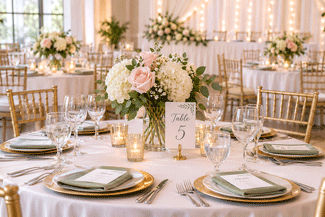
- Stationery: Table tents and place cards, menu cards, and reception cards (see the stationery checklist below).

On quality versus quantity, spend your effort on the items guests touch and see, such as place settings, napkins, and the table itself. It is better to have enough good-looking basics than a large pile of mismatched extras. If you use chafing fuel or candles, follow the manufacturer’s instructions and your venue’s rules on open flames — both present a real fire risk around linens and decor, so never leave them unattended.
Decorations and Ambiance
Decorations set the mood the moment guests walk in, and many of them are easy to do yourself. Balloons, banners, streamers, confetti, and flowers are classic choices that friends and family can help set up on the day.
To keep the room from feeling like a collection of random pieces, pick a theme and repeat it:
- Choose two or three colors. Use them for flowers, balloons, napkins, and printed stationery so everything looks related.
- Pick one repeating motif. A pattern, a monogram, or a simple border can tie the tables, signs, and cards together.
- Layer lighting. Candles (where allowed), string lights, or soft room lighting add warmth. Check your venue’s open-flame rules first.
- Keep tables simple. A few well-placed centerpieces and clear table cards look better than crowded tables.
Matching your place cards, menu cards, and reception cards to your colors is one of the simplest ways to make the whole reception feel planned. Browse wedding place cards and escort cards to coordinate with your decor.
Food and Beverage Needs
Start with the menu, then work out the supplies it needs. Pick dishes that suit your kitchen and the amount of help you have, and decide how each one will be served and kept at the right temperature.
- Match the menu to the venue. If you only have a basic kitchen, choose dishes that can be prepared ahead and reheated or held in chafing dishes.
- Cook ahead where you can. Pre-cooking in the days leading up to the wedding takes pressure off the day itself. Follow safe food storage and reheating practices.
- Plan the serving line. Set the serving table up so guests can move in one direction, with plates first and utensils and napkins last.
- Cover drinks. Plan cups, ice, coolers, and a clearly marked drink station, so you are not refilling from a hidden stash.
- Assign a food lead. One person who knows the plan keeps refills, labels, and cleanup on track.
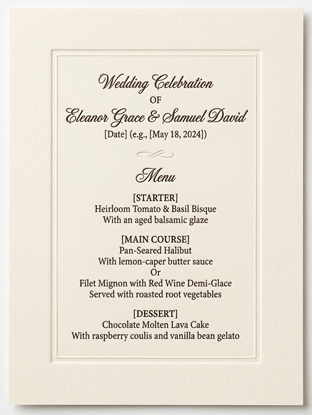
A printed menu card tells guests what is being served and adds a finished look to the table. For ideas on what to say, see Wedding Menu Cards Wording Suggestions, then browse PaperDirect’s menu cards to print your own.
Entertainment Options
Entertainment sets the pace of the reception. Whichever option you choose, ask the venue about noise limits, power access, and end times before you book.
- DJ: Needs a table or stage area, power outlets, and clear space for speakers and a dance floor.
- Live band: Needs more floor space, a setup and sound-check window, and power for amplifiers.
- Playlist and speakers: A budget-friendly option that needs a good speaker system, backup devices, and one person in charge of the music.
- Games and activities: Lawn games, photo props, or a guest book table need table space, signage, and someone to explain how they work.
Whatever you plan, leave a clear dance floor and a timeline for the key moments, such as the first dance, toasts, and cake cutting. A short printed timeline or program can keep guests and helpers on schedule.
Photography and Videography
Photos and video are how you will relive the day, so decide early how you will capture it. If a friend or family member will do it, give them a clear job and the right gear.
- Camera and backup: A good camera or phone, spare batteries, extra memory cards, and a charger.
- Tripod or stand: Useful for group photos and video of the ceremony or toasts.
- Lighting: Check the room’s lighting in advance. Reception halls can be dim, so portable lighting may help.
- Shot list: Write down the must-have moments and people so nothing gets missed.
- Photo sharing: Decide how guests will share their own photos, and add a small sign to explain it.
If you are doing it all yourself, consider hiring a professional for just the most important moments, such as the ceremony and family portraits, and let guests cover the rest.
Final Touches and Personalization
Small, personal details are what make a reception feel like yours. They also tend to be the pieces guests remember, from handwritten table notes to a favor at each seat.
- Favors: A small gift or a printed note at each place setting.
- Signage: A welcome sign, directional signs, and table numbers help guests find their way.
- Personalized details: Your names, wedding date, or a simple monogram on cards and decor.
- Thank-you notes: Plan these before the reception is over. Browse thank you note cards to have them ready for after the wedding.
Do a final walk-through the day before, if you can. Check that every table has what it needs, that the stationery matches your final seating, and that your helpers know where everything goes.
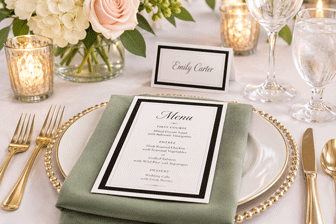
Bonus: Wedding Reception Stationery Checklist
Wedding reception stationery is the printed layer that ties your supplies together and helps guests find their way. Here is what to consider, and what each piece does:
- Reception cards: Small cards that give guests the reception details. They are often enclosed with the invitation when the reception is at a different location or time. See wedding reception cards.
- Place cards and escort cards: Name cards that tell each guest where to sit, either at the table or on the way in. See wedding place cards and escort cards.
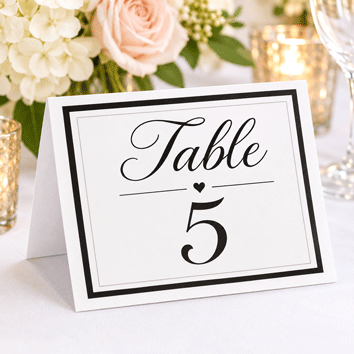
- Table tents: Folded cards that stand on the table, good for table numbers or names.
- Menu cards: A printed menu at each place setting or on the table. See menu cards.
- Programs: Ceremony programs and reception timelines can be printed with the same design for a matching set.
- Thank-you cards: Order them with the rest of your stationery so they are ready after the wedding.
Print place cards last, after the seating is final, and proofread every name. For the rest, choose one color or design and use it across the set. Check each product’s size and quantity before you order.
Bonus: Time, Helpers, and a Setup Timeline
If you are handling the reception yourself, the main thing you need is time. Plan time to set the room (tablecloths and place settings), time to cook, time to set up the serving table, and time to clean up, pack up, and head home.
The other key is helpers. With friends and family on prep, setup, and cleanup, the room can come together much faster, and cleanup goes more quickly too. Give each helper a specific job and a time to arrive.
- Days before: Pre-cook what you can, and confirm headcount and delivery times.
- Morning of: Set tables, linens, and stationery, then set up the serving area.
- Before guests arrive: Do a final check on seating cards, drinks, and the music.
- After the reception: Assign cleanup roles, and pack up borrowed or rented items.
Doing the reception yourselves takes work, but it can meaningfully cut costs compared with hiring out every part of it, and it gives everyone involved something that was made with care by the people closest to the couple.
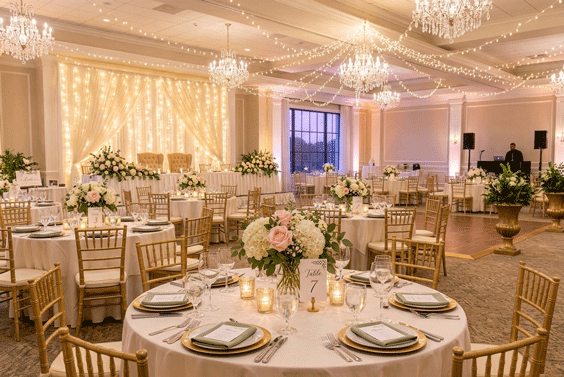
FAQ
What wedding reception stationery do I need?
Most receptions use a few core pieces: reception cards (if the reception details are not on the invitation), place or escort cards for seating, table tents or numbers, and menu cards. Many couples also add programs and thank-you cards. Choose what fits your guest count, venue, and level of formality.
What are the essential wedding reception supplies?
Start with tables and chairs, tablecloths, napkins, plates, cups, and utensils. Add serving dishes, chafing dishes with fuel, serving spoons and ladles, trash bags, and a can opener, plus decor like balloons, banners, and flowers. A wedding reception supplies checklist helps you adjust the list to what your venue provides.
When should I print my wedding reception stationery?
Print once your guest list, menu, and venue details are final. Place cards depend on final seating, so print them last, and allow time to proofread each name. Order extras for mistakes, and check the pack size and shipping time before you finalize the design.
Plan Well, Then Enjoy the Day
A successful reception comes from thorough planning: a clear budget, an accurate guest count, a venue you understand, and a supply list that covers the essentials first. Add the personal details, such as printed stationery that matches your theme, and give yourself enough time and helpers to carry it out. Then relax and enjoy the day you worked to create.
Ready to finish the details? Browse PaperDirect wedding reception cards, wedding place cards and escort cards, and menu cards to print the stationery for your reception.