
Valentine’s Day is full of surprises. Behind the chocolates and cards is a holiday with a murky saint, a medieval prison poem, a Roman god with a bow, and some record-setting spending. These fun facts of Valentine’s Day cover where the holiday came from, how other countries celebrate, what people actually buy, and why the brain lights up when we fall in love.
Use them as trivia for a party, a classroom, or a card. And if you’d rather write your own message, PaperDirect’s Valentine’s Day stationery is a good place to start.

The Origins of Valentine’s Day
Where did Valentine’s Day come from? The holiday honors St. Valentine, and February 14 is his feast day. The Catholic Church recognizes at least three early martyrs named Valentine, and the details of their lives remain murky. One popular legend says Valentine was a Roman priest who secretly married couples after Emperor Claudius II banned marriage for young men. According to History.com, the true story behind the legends is hard to pin down.
The Lupercalia link is disputed. A Roman fertility festival called Lupercalia took place around February 15. Many popular accounts say the Church replaced Lupercalia with St. Valentine’s Day, but some modern scholars question the connection and point out how little the two festivals actually have in common. Treat it as a popular theory, not settled fact.
Chaucer made it romantic. The first recorded link between St. Valentine’s Day and romantic love is generally credited to the English poet Geoffrey Chaucer, in his poem Parlement of Fowls from the 1380s. Chaucer set the poem at a time when many believed birds began choosing their mates in mid-February.
Valentines went mass-produced. In the late 1840s, Esther Howland of Worcester, Massachusetts, began selling mass-produced valentines in America. She is often called the “Mother of the Valentine.” By about 1900, printed cards had begun replacing handwritten ones.
The chocolate box. Cadbury is reported to have introduced heart-shaped boxes of chocolates for Valentine’s Day in 1868.
Valentine’s Day Around the World
Love is celebrated on different days, and in very different ways, around the globe. A few examples of how traditions vary:
- Japan. Women traditionally give chocolate to men on February 14. Men are expected to return the favor on White Day, March 14.
- South Korea. The February 14 and White Day pattern is similar there, too. Singles also observe Black Day, when they traditionally eat black noodles called jajangmyeon.
- Finland and Estonia. February 14 is Friend’s Day, when people exchange cards and small gifts with friends rather than only with romantic partners.
- Denmark. Some Danes send anonymous, rhyming love notes called gaekkebrev. The recipient has to guess who sent it.
- Wales. St. Dwynwen’s Day on January 25 is the Welsh celebration of lovers. Hand-carved wooden “love spoons” are a traditional gift.
- Brazil. Dia dos Namorados (Lovers’ Day) is celebrated on June 12 instead of February 14.
- The Philippines. Valentine’s Day is a popular date for weddings, and some towns hold free mass wedding ceremonies.
Customs change over time, so check local sources if you’re planning something authentic.
The Most Popular Valentine’s Day Gifts
What do people buy for Valentine’s Day? According to the National Retail Federation (NRF) and Prosper Insights, whose survey was conducted in early January 2026, candy is the most commonly planned gift. Here’s how the categories compare:
- Candy: 56% of people planned to buy it.
- Greeting cards: 41%.
- Flowers: 41%, with about $3.1 billion in expected spending.
- An evening out: 39%, with about $6.3 billion expected.
- Jewelry: 25% of people, but the biggest dollar category at about $7 billion.
- Gifts for pets: a record 35% planned to buy one, with about $2.1 billion expected, up from about $1.7 billion in 2025.
Flower fact. Victorians popularized a “language of flowers,” in which each bloom carried a meaning. A red rose stood for love, but the guides disagreed on many others. A yellow rose, for example, is listed as jealousy in some guides and is often described today as a sign of friendship. If you want to give flowers with a message, a handwritten note settles any confusion.
These percentages shift every year, so check the NRF’s latest survey before quoting them.
Love Letters Through the Ages
Why do love letters still matter? A handwritten letter is a keepsake. It can be saved, reread, and passed down, which a text message rarely is. Long before greeting-card aisles existed, people put their feelings into letters and poems. Two of the oldest surviving valentines are worth knowing:
The Duke of Orleans’ poem (1415). Charles, Duke of Orleans, was captured at the Battle of Agincourt and held in the Tower of London. There, he wrote a poem to his wife that opens, in translation, “I am already sick of love, my very gentle Valentine.” It’s often cited as the oldest known valentine, although historians sometimes debate what counts as the first.
Margery Brews’ letter (1477). Margery Brews wrote to her fiancé John Paston and called him “my right well-beloved Valentine.” The British Library holds the letter, and it’s considered the earliest surviving English valentine letter.
If you’d like to write your own, these tips help:
- Start with a specific memory instead of a general compliment.
- Keep it short and sincere. A few honest lines beat a page of clichés.
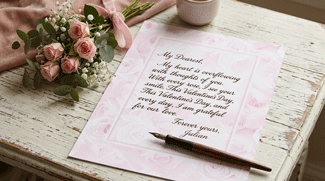
- Use paper that feels special. Valentine’s Day border papers work well for a heartfelt letter, whether you print or handwrite your message.
- Sign it by hand, and mail it early so it arrives on time.
For step-by-step help with wording, see The Art of Writing Valentine’s Day Love Letters. For inspiration from history’s most famous writers, read Famous Love Letters for Valentine’s Day Inspo.
Fun Valentine’s Day Statistics
Valentine’s Day is also big business. The most recent numbers come from the NRF’s January 2026 survey, along with long-standing card figures:
- $29.1 billion was the NRF’s projected record spending, up from $27.5 billion in 2025.
- $199.78 was the average amount shoppers said they planned to spend, up from $188.81 the year before.
- 55% of consumers said they planned to celebrate.
- About 145 million Valentine’s Day cards are bought each year, not counting classroom valentines, according to Hallmark. The Greeting Card Association says that makes it the second most popular seasonal card occasion, behind Christmas.
- About 80% of all greeting cards are bought by women, according to the Greeting Card Association. That figure covers cards in general, not just valentines.
Spending totals, averages, and gift trends are updated every year, so always date them. Statistics from 10 or 20 years ago, such as the commonly repeated early-2000s averages, no longer describe today’s holiday.
The Role of Cupid
Who is Cupid? Cupid is the Roman god of love and the counterpart of the Greek god Eros. In Latin literature, he’s usually the son of Venus, the goddess of love. Later tradition often names Mars as his father, but ancient writers never fully agreed on his parentage.
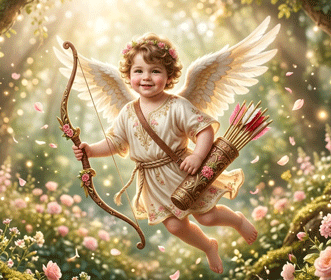
Early Greek art showed Eros as a slender winged youth. By the Hellenistic period, artists were drawing him as a chubby boy, which is the image we still see on valentines today.
What does Cupid symbolize? His wings suggest that lovers can be changeable, and his youth suggests that love isn’t always rational. The arrow and torch stand for love that wounds and inflames the heart. One of the best-known stories about Cupid, Cupid and Psyche, comes from the Roman writer Apuleius in the 2nd century AD.
Valentine’s Day in Pop Culture
Love has inspired plenty of songs, sweets, and television. A few favorites:
“My Funny Valentine.” Richard Rodgers and Lorenz Hart wrote the song for the 1937 Broadway musical Babes in Arms. The “Valentine” is a character’s name rather than the holiday, but the song became a jazz standard, with recordings by Chet Baker, Frank Sinatra, and Ella Fitzgerald.
Conversation hearts. NECCO introduced its printed “conversation candies” around 1866, and the small heart-shaped versions with messages like “Be Mine” followed. Today, Spangler Candy makes just over 600 million of them each year, according to History.com.
Galentine’s Day. The “Galentine’s Day” episode of Parks and Recreation aired on February 11, 2010. In it, Leslie Knope throws a breakfast for her women friends. The idea caught on, and the Greeting Card Association notes that people now celebrate on February 13.
Unique Valentine’s Day Celebrations
Valentine’s Day doesn’t have to mean a candlelit dinner for two. Some creative ways people celebrate:
- Galentine’s Day or Friend’s Day. Celebrate your friends with cards, a brunch, or a handwritten thank-you.
- Wedding or vow renewal. Some couples marry or renew their vows on February 14.
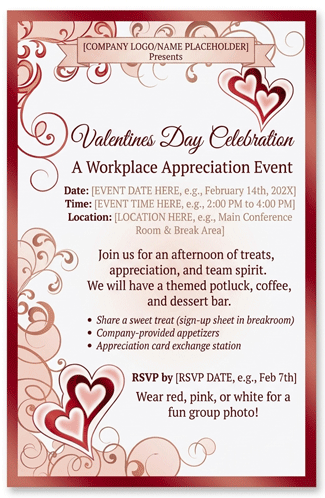
- A Valentine’s party. Host a classroom, office, or friends’ party, and send Valentine’s Day invitations to set the mood.
- A pet treat. With a record share of people buying gifts for pets, your dog or cat can have a valentine too.
- A singles celebration. Take inspiration from South Korea’s Black Day and enjoy a night with friends.
- Handwritten notes. Leave short messages for your partner, kids, or coworkers. They cost little and mean a lot.
PaperDirect also has Valentine’s Day invitations if you’re hosting a party.
The Science of Love
What happens in the brain when we fall in love? A well-known 2005 study in the Journal of Neurophysiology scanned the brains of 17 young men and women who said they were newly and intensely in love. Researchers Arthur Aron, Helen Fisher, and Lucy Brown found that looking at a photo of the beloved activated brain areas, including the right ventral tegmental area and the caudate, that are part of the dopamine-rich reward system.
In other words, early romantic love appears to engage some of the same reward circuitry as other strongly motivating experiences. It’s a small study, but it helped popularize the idea that romantic love is a powerful drive, not just a feeling. Fisher has described romantic love as “one of the most powerful of all human experiences.”
A fun takeaway: the next time someone says a love letter made their day, there may be some brain science behind it.
Tell Your Valentine You Care
From a medieval prison poem to a record-setting shopping season, Valentine’s Day has a lot more history than most people realize. Whether you use these fun facts as party trivia or as inspiration for your own message, the best part of the day hasn’t changed: telling someone you care.
A handwritten note, a printed card, or a thoughtful invitation is a simple way to do it, whoever your valentine is. Ready to share the love? Browse PaperDirect’s Valentine’s Day stationery for letter papers, add Valentine’s Day border papers for your own heartfelt message, or send Valentine’s Day invitations to your party.
FAQ
What are some fun facts about Valentine’s Day?
A few favorites: the oldest known valentine is a 1415 poem written in the Tower of London, Chaucer is credited with first linking the day to romance, and candy is the gift most people plan to buy. Cupid is the Roman counterpart of the Greek god Eros, and Japan celebrates White Day on March 14.
Who invented Valentine’s Day and how did it start?
No single person invented it. The day honors St. Valentine, a third-century martyr whose story is shrouded in legend. Chaucer is credited with first tying February 14 to romance in the 1380s. Handmade valentines grew into printed cards in the Victorian era, and Esther Howland helped popularize mass-produced valentines in the United States.
How much do Americans spend on Valentine’s Day?
According to the National Retail Federation’s January 2026 survey, Americans planned to spend a record $29.1 billion on Valentine’s Day, up from $27.5 billion in 2025. Shoppers budgeted about $199.78 on average. Jewelry was the largest category at roughly $7 billion. These figures are updated every year, so check the latest report.
What is the oldest known valentine?
A poem written in 1415 by Charles, Duke of Orleans, to his wife while he was held in the Tower of London is often called the oldest known valentine. The earliest surviving English valentine letter is Margery Brews’ note to John Paston, dated February 1477 and held by the British Library.